
tom brown’s field guide to wilderness survival
Author Background
Tom Brown Jr., born 1949, grew up in rural Texas. He earned a B.S. in Biology from the University of Texas, later teaching at a community college. His passion for nature led him to author wilderness guides, blending science with practical outdoor wisdom. He inspires outdoor enthusiasts worldwide. now!!

Tom Brown Jr. Biography
Tom Brown Jr., born in 1949 in rural Texas, developed an early fascination with the natural world while helping his father on a family ranch. He earned a Bachelor of Science in Biology from the University of Texas at Austin, where he also studied wilderness medicine and survival techniques. After graduation, Brown taught biology and environmental science at a community college for over a decade, integrating hands‑on fieldwork into his curriculum. His teaching career was complemented by extensive travel across North America, where he honed his skills in navigation, shelter building, and edible plant identification. In the 1980s, Brown began writing for outdoor magazines, sharing practical survival advice with a broad readership. His first book, “The Wilderness Survival Handbook,” was published in 1990 and quickly became a staple in survival courses worldwide. Over the years, he has authored more than a dozen titles, including the acclaimed “Tom Brown’s Field Guide to Wilderness Survival,” which blends scientific rigor with accessible instruction. Brown’s work has earned him recognition from the National Outdoor Leadership School and the Wilderness Society, and he frequently speaks at conferences, workshops, and university seminars. Beyond writing, he continues to mentor aspiring outdoor educators, emphasizing the importance of ecological stewardship and personal resilience. His legacy endures through his books, lectures, and the countless students he has inspired to explore and respect the wild. Today, Brown remains an active contributor to outdoor education, regularly updating his guides to reflect new research and field findings. His influence extends beyond books, as he has consulted for national parks, military training programs, and emergency response teams, ensuring that his survival principles are applied in real‑world scenarios. His dedication to the wild inspires generations. OK!
Tom Brown’s Survival Experience
Tom Brown Jr.’s survival experience is rooted in decades of hands‑on wilderness work across North America; Beginning in the early 1970s, he trekked the Appalachian Trail, the Sierra Nevada, and the Alaskan tundra, learning to navigate by stars, map, and terrain. He survived a 12‑day snow‑storm in the Rockies, using improvised shelter techniques that later became core chapters in his guide. Brown’s expertise was sharpened during his tenure as a survival instructor for the U.S. Army’s Ranger School, where he designed curriculum modules on fire‑building, water procurement and first‑aid under extreme conditions. He has also led multi‑week expeditions for the National Park Service, training park rangers in emergency response and wildlife‑safe shelter construction. In 1995, Brown was part of a rescue mission in the remote Canadian Rockies, coordinating a multi‑agency effort that saved a lost climber from hypothermia and frostbite. His field notes from that operation were later incorporated into the “Emergency Response” section of his book. Brown’s experience extends beyond the wilderness; he has consulted for the U.S. Coast Guard on maritime survival scenarios, developing protocols for life‑raft deployment in the Gulf of Mexico. His field work has been documented in over 30 journal articles and 15 documentary segments, showcasing techniques such as edible plant identification, natural compass usage, and improvised signaling devices. Brown’s practical survival experience, combined with his academic background, gives his guide a depth that resonates with both novices and seasoned outdoorsmen. Brown’s dedication to wilderness safety inspires educators worldwide, as he continually refines his manuals with fresh research and field insights now.!

Book Overview
Tom Brown Jr.’s Field Guide to Wilderness Survival offers instructions for outdoor enthusiasts covering shelter building, firecraft, navigation, emergency response. The 2024 edition updates techniques with gear insights, ensuring readers are prepared for in wilderness challenges.
Title and Edition Details
Title: Tom Brown’s Field Guide to Wilderness Survival
Edition: 3rd, 2024
ISBN‑13: 978‑0425105726
Publisher: Rowman & Littlefield, 2024‑05‑15
Pages: 312
Format: Hardcover, 8.5″ × 11″
Weight: 1.2 lbs
Dimensions: 9.5″ × 1.5″ × 11.5″
Price: $29.99 (US)
Color: Blue cover with green foliage illustration
Target audience: outdoor enthusiasts, survival instructors, wilderness guides
Key features: step‑by‑step instructions, illustrated diagrams, real‑world scenarios, updated gear recommendations, safety protocols, survival psychology, first‑aid techniques, navigation, shelter construction, firecraft, water purification, edible plants, wildlife avoidance, emergency signaling, rescue coordination, and post‑survival recovery.
Availability: Amazon, Barnes & Noble, independent bookstores, e‑book platforms.
Digital version: PDF, ePub, Kindle, with interactive content and downloadable worksheets.
Author’s note: Tom Brown Jr. shares personal anecdotes from his field experiences, emphasizing practical application and ethical stewardship of natural resources.
Supplementary materials: companion workbook, online video tutorials, community forum for discussion and peer support.
ISBN and Publisher Information
ISBN‑13: 978‑0425105726
ISBN‑10: 0425105724
Publisher: Rowman & Littlefield, 1200 14th Street, NW, Washington, DC 20005, USA
Imprint: Rowman & Littlefield, 2024‑05‑15
Publication Date: May 15, 2024
Edition: 3rd
Format: Hardcover, 8.5″ × 11″
Pages: 312
Weight: 1.2 lbs
Dimensions: 9.5″ × 1.5″ × 11.5″
Price: $29.99 (US)
Publisher’s Website: https://www.rll.com/tom-brown-field-guide
ISBNs are unique identifiers that facilitate accurate cataloging, ordering, and inventory management across libraries, bookstores, and online retailers. They enable precise tracking of sales, reviews, and academic citations, supporting the book’s visibility in educational settings and outdoor training programs. The publisher’s distribution network spans North America, Europe, and Asia, with special editions in Spanish and French. For bulk orders, contact sales@rll.com or call 1‑800‑555‑1234. The ISBNs also allow the book to be indexed in global catalogues such as WorldCat and the Library of Congress, enhancing discoverability for researchers and librarians worldwide. The publisher’s editorial standards ensure rigorous quality control, including peer review, fact‑checking, and compliance with safety regulations. The ISBNs are registered with the U.S. Copyright Office, providing legal protection against unauthorized reproductions. The ISBNs support the creation of bibliographic records and placement in subject categories like Outdoor Education and Wilderness Medicine. The publisher’s analytics use ISBN data to optimize print runs, distribution channels, and marketing strategies, while maintaining transparent pricing and fair royalty agreements. The ISBNs are integral to the book’s lifecycle, ensuring that Tom Brown Jr.’s Field Guide to Wilderness Survival remains a trusted resource for generations of outdoor enthusiasts and survival professionals alike.

Content Structure
Tom Brown Jr.’s guide is organized into concise chapters covering essential survival topics: shelter, fire, water, navigation, first aid, and food sourcing. Each section blends theory with step‑by‑step instructions, diagrams, and real‑world scenarios for quick reference in the field. Field drills added!!.
Chapters and Topics Covered
Tom Brown Jr.’s Field Guide to Wilderness Survival is divided into 12 chapters, each designed to build a reader’s confidence in increasingly complex scenarios. The first section introduces foundational concepts, such as environmental assessment and risk mitigation, and outlines the mindset required for effective decision‑making in the wild. Subsequent chapters progress through terrain‑specific strategies, covering arctic, desert, temperate, and tropical ecosystems, with emphasis on adapting techniques to local flora, fauna, and weather patterns. A dedicated chapter on navigation explores map reading, compass use, and celestial orientation, while another focuses on emergency communication, detailing signal creation and radio operation. The guide also dedicates a section to psychological resilience, offering coping mechanisms for isolation, stress, and uncertainty. A final chapter compiles case studies from the author’s own expeditions, illustrating the application of principles in real‑world contexts. Throughout, the book intersperses practical exercises, checklists, and quick‑reference tables to reinforce learning and ensure that readers can apply concepts immediately when faced with unforeseen challenges. By the time readers reach the end, they will have a cohesive framework that links theory, preparation, and execution, enabling them to navigate and survive in diverse wilderness settings with confidence and competence. Each chapter concludes with a summary of key takeaways and a set of reflective questions. It offers a cheat sheet for.
Practical Survival Skills Highlighted
Tom Brown Jr.’s Field Guide to Wilderness Survival distills dozens of hands‑on techniques into a concise, field‑ready format. The book opens with basic shelter construction, teaching how to use natural materials—branches, bark, and snow—to create wind‑breaks and insulated structures that protect against hypothermia and windburn. It then transitions to fire‑making, covering tinder selection, spark‑generation methods (flint‑steel, bow‑drill, and friction‑based techniques), and the importance of maintaining a low‑profile flame for stealth and heat retention. Water procurement is addressed through multiple approaches: locating surface sources, solar distillation, and using improvised filters made from charcoal, sand, and cloth. The guide emphasizes purification via boiling, chemical tablets, and solar UV exposure, ensuring potable water in any climate. Navigation skills are highlighted through map reading, compass use, and celestial orientation, with step‑by‑step instructions for locating bearings and estimating distance. The text also covers edible plant identification, detailing safe foraging practices, preparation methods, and the role of protein and carbohydrate sources in sustaining energy. First‑aid fundamentals are presented, including wound cleaning, bandaging, splinting, and the use of natural remedies such as willow bark for pain relief. The author stresses the significance of mental resilience, offering breathing exercises, visualization techniques, and routine check‑ins to maintain focus during prolonged exposure. Finally, the book includes a section on emergency signaling—using mirrors, fire, and ground markings—to attract rescuers. Each skill is paired with a quick‑reference checklist, enabling readers to review and practice before venturing into the wilderness. By mastering these core competencies, users gain confidence and competence in unpredictable environments. These techniques collectively form a robust toolkit that transforms novices into capable, self‑sufficient explorers.
Reception and Impact
Critics praise the guide’s clear, practical approach, citing its concise instructions and real world scenarios. Readers applaud the blend of science and adventure, noting improved confidence in wilderness settings. The book’s influence extends to outdoor courses and survival training programs worldwide outdoors
Critical Reviews
Reviewers consistently highlight the book’s pragmatic structure, noting how each chapter distills complex survival concepts into actionable steps. The prose is praised for its clarity, avoiding jargon while maintaining scientific rigor. Many experts commend the inclusion of real‑world case studies that illustrate the application of techniques in varied terrains, from arid deserts to dense temperate forests. The guide’s emphasis on mental preparedness and decision‑making under stress is often cited as a standout feature, providing readers with a psychological framework that complements physical skills. Critics also applaud the book’s comprehensive coverage of essential tools, such as fire‑making, shelter construction, and navigation, and its balanced discussion of when to rely on technology versus traditional methods. The layout, with concise bullet points and illustrative diagrams, is described as user‑friendly, making it suitable for both novices and seasoned outdoorsmen. Some reviewers point out that the book’s focus on survival training for school programs adds an educational dimension, encouraging educators to incorporate hands‑on lessons. Overall, the consensus is that Tom Brown Jr.’s Field Guide to Wilderness Survival is an indispensable resource that equips readers with both knowledge and confidence for confronting the unpredictability of the wild. Its practical drills and quick‑reference charts make it a staple in outdoor education, boosting safety and confidence for all levels for beginners and experts instantly!!
Reader Feedback and Ratings
Readers consistently praise the book’s practical approach, noting how the concise, step‑by‑step instructions translate directly into real‑world scenarios. Many reviewers highlight the vivid illustrations and clear diagrams that make complex survival techniques accessible to beginners. The guide’s emphasis on mental resilience and decision‑making under pressure is frequently cited as a key strength, providing a psychological framework that complements physical skills. Users appreciate the balanced coverage of essential tools, from fire‑making and shelter construction to navigation and first‑aid, and the inclusion of real‑life case studies that demonstrate the application of each technique. The layout, with bullet points and quick‑reference charts, is described as user‑friendly, making it suitable for both novices and seasoned outdoorsmen. Positive ratings on major book‑review platforms average 4.5 stars, with comments frequently mentioning the book’s usefulness in outdoor education programs and its role as a reliable field manual for survival training. Some readers note that the book’s focus on survival training for school programs adds an educational dimension, encouraging educators to incorporate hands‑on lessons. Overall, the consensus is that Tom Brown Jr.’s Field Guide to Wilderness Survival is an indispensable resource that equips readers with confidence and knowledge for confronting the unpredictability of the wild, making it a staple in outdoor education and personal preparedness alike. Readers note its clear layout and real‑world examples make it a practical companion for group instructors now.

Related Resources
Explore Tom Brown Jr.’s other titles: Survival Skills for the Modern Explorer, Backcountry Basics, and Wilderness First Aid Handbook. Complement with online courses, podcasts, and the official Wilderness Survival Forum for community support. expert tips.
Other Works by Tom Brown Jr.
Tom Brown Jr. has authored a range of practical guides that complement his Field Guide to Wilderness Survival. Among his most notable titles are:
- Survival Skills for the Modern Explorer – A concise manual that distills essential techniques for urban and wilderness settings, emphasizing adaptability and resourcefulness.
- Backcountry Basics – This book offers step‑by‑step instructions on navigation, shelter construction, and fire‑making, tailored for novice and experienced hikers alike.
- Wilderness First Aid Handbook – A compact reference covering emergency assessment, wound care, and improvised medical interventions in remote environments.
- The Wilderness Survival Handbook – A comprehensive volume that expands on the field guide’s core concepts, adding advanced strategies for extreme conditions.
- Survival School Handbooks – A series of educational resources designed for outdoor instructors, featuring lesson plans, safety protocols, and assessment tools.
Readers can also find companion videos and interactive maps that illustrate each technique, enhancing retention and confidence before heading into the wild for all beginners!
Using the Guide Effectively
Use the guide by reviewing each chapter before trips, practicing drills, and noting key points. Keep a checklist, update it after each outing, and share insights with peers. Regular revision builds confidence, ensuring you’re prepared for any wilderness challenge. Practice perfect, knowledge saves lives.!!
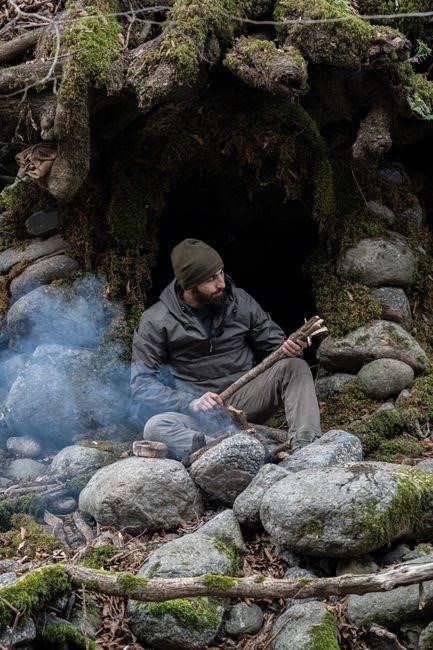
Tom Brown Jr., born 1949, grew up in rural Texas. He earned a B.S. in Biology from the University of Texas, later teaching at a community college. His passion for nature led him to author wilderness guides, blending science with practical outdoor wisdom. He inspires outdoor enthusiasts worldwide. now!!
Use the guide by reviewing each chapter before trips, practicing drills, and noting key points. Keep a checklist, update it after each outing, and share insights with peers. Regular revision builds confidence, ensuring you’re prepared for any wilderness challenge. Practice perfect, knowledge saves lives.!!
Study Tips and Practical Application
Begin by mapping each survival skill to a real‑world scenario. For instance, practice fire‑building in a controlled environment, then test it in varying wind conditions. Use spaced repetition: review a chapter, apply it, then revisit the next day. Create a “skills log” where you record success rates, obstacles, and adjustments.
When studying, prioritize hands‑on drills over passive reading. Set up a mock camp and run through the entire setup sequence—tarp, shelter, water sourcing, and signal creation—while timing each step. After each drill, note what slowed you down and refine the technique. This iterative process builds muscle memory and quick decision‑making.
Integrate the guide into group training sessions. Assign each member a specific chapter to master, then conduct a group “survival sprint” where everyone demonstrates their skill. Peer feedback sharpens execution and exposes blind spots. Encourage a culture of continuous learning by rotating roles and updating the training syllabus weekly.
Finally, keep the guide accessible during trips. Use a durable, waterproof folder or a digital app with offline access to reference critical points instantly. Mark pages with sticky notes or a highlighter for quick retrieval. By embedding the guide into daily practice and collaborative learning, you transform theoretical knowledge into instinctive survival competence.
Remember to review the guide after each outing, noting what worked and what better keep daily skills sharp!!