catholic rite of baptism pdf
Baptism, a foundational Catholic sacrament, is often administered to infants, removing Original Sin and symbolizing rebirth in Christ, as detailed in available PDF guides.
Historical Context of Baptism
Baptism’s roots trace back to John the Baptist, who baptized Jesus in the Jordan River, marking a pivotal moment in Christian history. Early Christians, following Jesus’s example, embraced baptism as a public declaration of faith and repentance. The earliest documented practices, often found within historical Catholic texts and PDF resources detailing the rite, involved full immersion in water, symbolizing death to sin and resurrection to new life in Christ.
Over centuries, the practice evolved, with variations in method – from immersion to infusion – emerging alongside theological developments. Examining historical liturgical books, often available as PDF downloads, reveals how the ceremony gradually incorporated specific prayers, blessings, and symbolic actions. The Catholic Church consistently maintained baptism’s essential nature as the gateway to other sacraments, a tradition meticulously preserved in its historical records and contemporary PDF guides.
Theological Foundations of Baptism
Baptism rests upon core theological tenets: the forgiveness of Original Sin, initiation into Christ, and incorporation into the Church. Catholic doctrine, extensively explained in Church documents and accessible PDF resources, views baptism not merely as a symbolic act, but as a true and efficacious sign of God’s grace. This sacrament cleanses from sin and bestows the Holy Spirit, fundamentally changing the recipient’s spiritual state.
The rite’s efficacy stems from the Trinitarian formula – invoking the Father, Son, and Holy Spirit – emphasizing the divine power at work. Detailed theological explanations, often found in PDF format, clarify how baptism configures the baptized to Christ, making them members of His Body, the Church. Understanding these foundations, as outlined in official Catholic teachings, is crucial for appreciating the profound significance of this sacrament.

The Rite of Baptism: A Detailed Overview
The Catholic rite involves water, Trinitarian invocation, and symbolic elements like the white garment, thoroughly documented in accessible PDF guides for understanding.
Preparation for Baptism
Baptismal preparation is a crucial stage, ensuring candidates and their families understand the sacrament’s profound significance. Numerous resources, often available as PDF documents from dioceses and parishes, outline the necessary steps. These guides detail the spiritual journey undertaken before receiving the sacrament.
For infants, preparation primarily involves the parents, who demonstrate faith and commitment to raising their child within the Catholic Church. Adult preparation, however, is more extensive, often involving the Catechumenate process.
These preparatory materials frequently emphasize the importance of understanding the renunciation of sin and the profession of faith, central tenets of the Baptism ceremony. Detailed PDFs provide clarity on these aspects, ensuring a meaningful and informed experience for all involved.
Parent and Godparent Requirements
Catholic Baptism necessitates specific qualifications for parents and godparents, detailed in parish PDF guides. Parents must be practicing Catholics, demonstrating an active faith life and commitment to raising their child within the Church. At least one parent should be Catholic, though exceptions exist with pastoral discretion.
Godparents, also known as sponsors, hold a vital role in supporting the child’s faith journey. They must be practicing Catholics, at least sixteen years old, and have received the sacraments of Confirmation and Eucharist.
PDF resources often clarify that godparents are to be living examples of the faith, offering guidance and support. Non-Catholic witnesses are permitted, but cannot fulfill the spiritual role of a godparent.
Baptismal Preparation Classes
Most Catholic parishes require Baptismal Preparation Classes for parents and godparents, information readily available in parish PDF documents. These classes illuminate the profound significance of the sacrament, exploring its theological foundations and practical implications for raising a child in the faith.
Typically, these sessions cover topics like the meaning of Original Sin, the role of parents in fostering spiritual growth, and the responsibilities of godparents; PDF guides often outline the curriculum, including discussions on the Baptism ceremony itself.
Classes provide a supportive environment for questions and reflection, ensuring participants understand the commitment they are making. They are a crucial step in preparing for this sacred rite.
The Essential Elements of the Rite
The Catholic Rite of Baptism centers around three core elements, meticulously detailed in liturgical PDF guides. First, the invocation of the Holy Trinity – Father, Son, and Holy Spirit – establishes the sacred context. Secondly, the application of water, traditionally through infusion or immersion, symbolizes purification and new life in Christ.
Finally, the presentation of the white garment signifies purity and a new identity in Christ, while the Baptismal candle represents the light of faith. These elements, as outlined in official Catholic Church PDFs, are inseparable from the sacrament’s efficacy.
Each component carries deep symbolic weight, reflecting the transformative power of Baptism.
The Invocation of the Holy Trinity
The invocation of the Father, Son, and Holy Spirit is a pivotal moment within the Catholic Rite of Baptism, thoroughly explained in liturgical PDF resources. This solemn prayer explicitly calls upon each person of the Trinity to bless the baptismal water and bestow grace upon the candidate.
Priests pronounce specific formulas, invoking the Father as creator, the Son as redeemer, and the Holy Spirit as sanctifier. This threefold invocation underscores the belief in one God existing in three divine persons, central to Catholic doctrine.
PDF guides emphasize its importance as establishing the sacredness of the rite and the candidate’s entry into the Trinitarian faith.

The Use of Water: Immersion or Infusion
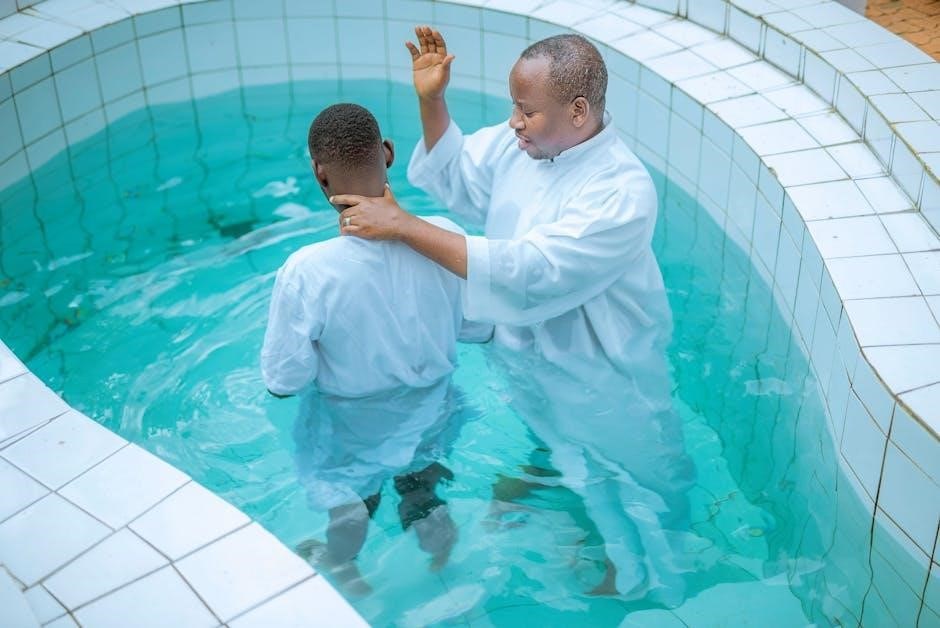
Traditionally, Catholic Baptism utilizes water as the essential element, symbolizing purification and new life in Christ, details readily available in liturgical PDF documents. Historically, full immersion was the standard practice, signifying complete death to sin and resurrection with Christ.
However, the Catholic Church now commonly practices infusion – pouring water over the head – while immersion remains a valid and encouraged option, particularly for adults. PDF guides clarify that the efficacy of the sacrament doesn’t depend on the method.
The triple pouring or immersion represents the Holy Trinity and signifies the complete and irrevocable nature of God’s grace.
The White Garment: Symbolism and Meaning
Following Baptism, the newly initiated receives a white garment, a powerful symbol detailed in Catholic liturgical PDFs. This garment signifies purity, representing the cleansing from sin achieved through the sacrament and the new life in Christ.
It’s a visible sign of the baptized person’s commitment to live a life of holiness and virtue, reflecting the radiance of Christ. The white color also symbolizes resurrection and the hope of eternal life.
PDF resources emphasize that wearing the white garment isn’t merely ceremonial; it’s a call to ongoing conversion and a reminder of the dignity bestowed by Baptism. It represents a new creation in Christ.
The Liturgical Steps of the Baptism Ceremony
The Catholic Baptism ceremony, thoroughly outlined in liturgical PDF guides, unfolds in distinct steps. It begins with the reception of the candidate and the Liturgy of the Word, proclaiming God’s saving deeds.
Crucially, the rite includes the Exorcism and Blessing of the Baptismal Water, preparing for the renunciation of sin and a profession of faith by the candidate or their sponsors.
The actual Baptism – either by immersion or infusion – follows, accompanied by the Trinitarian formula. Subsequent steps involve anointing with oil, the presentation of the white garment, and the lighting of the baptismal candle, symbolizing Christ’s light.
Reception of the Candidate
The Catholic Baptism ceremony, as detailed in liturgical PDF resources, commences with the reception of the candidate – the individual seeking Baptism. This initial stage signifies the Church’s welcoming embrace and acknowledgment of God’s initiative in offering salvation.
Typically, the priest or deacon greets the candidate and their family, inquiring about their intention to receive the sacrament. This public declaration affirms their desire to embark on a life of faith within the Catholic community.
This welcoming sets the tone for the entire rite, emphasizing the joy and solemnity of entering into the Christian faith.
The Liturgy of the Word
Following the reception, the Catholic Baptism rite, as outlined in liturgical PDF guides, progresses with the Liturgy of the Word. This segment isn’t merely a reading; it’s a foundational encounter with God’s revealed truth.
Typically, one or more Scripture readings are proclaimed, chosen to reflect the significance of Baptism – often referencing Jesus’ own Baptism and the call to new life. These readings illuminate the meaning of the sacrament and prepare those present for the central act of Baptism.
A homily then unpacks these readings, connecting them to the candidate’s journey and the broader Christian faith.
The Exorcism and Blessing of Baptismal Water
A pivotal moment in the Catholic Baptism rite, detailed in liturgical PDFs, is the Exorcism and Blessing of the Water. The priest performs an exorcism, beseeching God to deliver the candidate from the power of sin and Satan, preparing the water for its sacred purpose.
Following the exorcism, the priest blesses the water, invoking the Holy Spirit to sanctify it. This blessing isn’t merely a symbolic gesture; it transforms the water into a powerful sign of purification and new life in Christ.
The blessed water becomes the instrument through which God’s grace is imparted, washing away sin and initiating the candidate into the Christian community.
Renunciation of Sin and Profession of Faith
Central to the Catholic Baptism ceremony, as outlined in liturgical PDF resources, is the renunciation of sin and the public profession of faith. For adults, and by proxy through parents and godparents for infants, this signifies a turning away from evil and an embrace of the Christian life.
The candidate (or their representatives) explicitly rejects Satan, all his works, and all his empty promises. This rejection is followed by a solemn profession of belief in God the Father, Son, and Holy Spirit – the core tenets of the Catholic faith.
This declaration isn’t merely words; it’s a commitment to live a life guided by the teachings of Christ.

Specifics of Infant Baptism
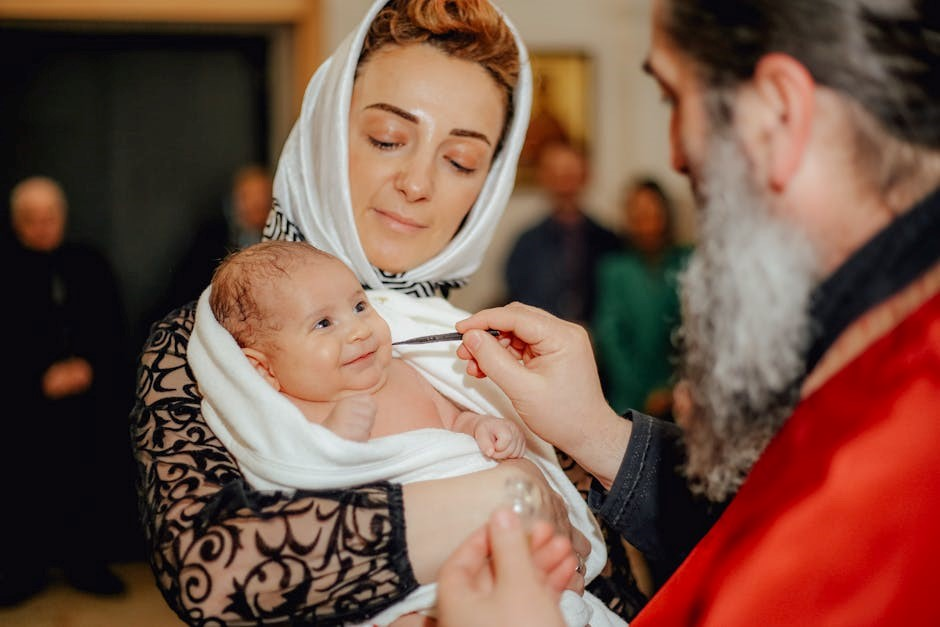
Infant Baptism, common in the Catholic Church, removes Original Sin, with parents and godparents professing faith, as detailed in PDF liturgical guides.
Original Sin and its Removal
Catholic theology centers on the concept of Original Sin, inherited from Adam and Eve’s disobedience, resulting in a wounded human nature and separation from God’s grace. This isn’t a personal guilt for a specific act, but a deprived state. Baptism, therefore, isn’t merely a symbolic cleansing; it’s a real, efficacious sign of grace that removes this Original Sin.
Detailed explanations within Catholic Church documents, often available as PDFs, clarify that Baptism restores sanctifying grace, bringing individuals into a relationship with the Holy Trinity. This removal of Original Sin isn’t simply forgiveness, but a transformative act, opening the recipient to divine life. The rite itself, as outlined in liturgical PDFs, emphasizes this spiritual rebirth through water and the invocation of the Holy Trinity, signifying a new creation in Christ.
The Role of Parents in Infant Baptism
Parents hold a primary role in initiating their child into the Catholic faith through Baptism. They demonstrate their desire for their child to receive God’s grace and be incorporated into the Church community. This commitment is publicly affirmed during the Baptism ceremony, as detailed in liturgical PDF guides.
PDF resources from the Catholic Church emphasize that parents aren’t merely presenting their child to the Church, but actively participating in the sacrament. They are called to raise their child in the faith, nurturing their spiritual growth. Preparation classes, often outlined in parish PDFs, equip parents to understand their ongoing responsibility. Their role extends far beyond the Baptism itself, encompassing a lifelong commitment to fostering their child’s relationship with God.
Choosing Godparents for Infants
Selecting godparents is a significant responsibility within the Catholic Church, detailed in numerous parish PDF guides. Godparents, also known as sponsors, support the child’s spiritual journey and assist the parents in raising them within the faith. They must be practicing Catholics, having received the sacraments of Eucharist and Confirmation, as outlined in official PDF documents.
PDF resources emphasize that godparents aren’t merely honorary figures; they actively promise to help the child live a life of faith. They serve as role models and offer guidance. Often, parishes provide specific criteria and application forms, available as PDF downloads, to ensure godparents meet the necessary qualifications. Choosing wisely is crucial, as their influence can profoundly impact the child’s spiritual development.
Adult Baptism: A Different Journey
Adult Baptism involves a distinct process, often the Catechumenate, thoroughly explained in Catholic PDF resources, differing significantly from infant baptism preparation.
Catechumenate Process
The Catechumenate is a lengthy, transformative journey for adults seeking full initiation into the Catholic Church. Detailed outlines of this process are readily available in comprehensive PDF guides published by dioceses and Catholic organizations. It’s a period of sustained conversion, involving several stages: pre-catechumenate, catechumenate proper, purification and enlightenment, and finally, the reception into the Church.
Throughout, candidates—referred to as catechumens—participate in liturgical rites and receive instruction in the faith. These PDF resources emphasize the importance of discernment, spiritual direction, and community support. The process isn’t merely intellectual; it’s a holistic conversion of heart, mind, and soul, preparing individuals for the sacraments of initiation – Baptism, Confirmation, and Eucharist. The Catechumenate aims to foster a deep and lasting faith, rooted in a personal relationship with Jesus Christ.
The RCIA (Rite of Christian Initiation of Adults)
The RCIA, meticulously detailed in official Catholic Church documents often available as PDF downloads, is the formal process through which adults become members of the Catholic Church. It’s a restoration of the ancient order of initiation, encompassing several distinct stages. These stages include evangelization and pre-catechumenate, the Catechumenate itself, Purification and Enlightenment, and finally, Reception into the Church.
PDF guides outline the specific rites and ceremonies within each stage, emphasizing the importance of community involvement and spiritual accompaniment. The RCIA isn’t a program, but a journey of faith, fostering conversion and a deeper understanding of Catholic teachings. It culminates in the celebration of the Sacraments of Initiation at the Easter Vigil, welcoming new members into the fold.
Profession of Faith by Adults
The adult’s profession of faith, a pivotal moment within the RCIA—often comprehensively explained in Catholic resources available as PDFs—is a public declaration of belief in the core tenets of the Catholic faith. This isn’t merely rote recitation; it’s a deeply personal and informed commitment. Prior to this, candidates undergo extensive catechesis, studying scripture, tradition, and the teachings of the Church.
PDF guides detailing the rite emphasize the importance of understanding the Creed—the Nicene Creed specifically—and its implications for daily life. The profession is made before the bishop or his delegate, signifying acceptance into the Catholic community. It’s a powerful testament to the transformative power of faith and a joyful embrace of the Catholic Church.
Variations in Baptismal Rites
PDF resources detail emergency baptism procedures and the concept of “Baptism of Desire,” acknowledging God’s grace even outside standard Catholic rite protocols.
Emergency Baptism
PDF documents outlining Catholic baptismal rites address situations where immediate danger of death prevents the typical ceremony. In such cases, anyone – even a non-baptized person – can administer the sacrament; The essential element is the pouring of water over the head of the individual while saying, “I baptize you in the name of the Father, and of the Son, and of the Holy Spirit.”
This simplified rite underscores the Church’s desire to extend God’s grace to all, even under the most dire circumstances. Detailed guides available in PDF format emphasize the intention to baptize is paramount, and a proper celebration with a priest is encouraged when possible after the emergency has passed. These resources provide clear instructions for laypersons facing such critical moments.
Baptism of Desire
Catholic theology, detailed in numerous PDF resources on sacramental theology, recognizes “Baptism of Desire.” This applies to individuals who, through no fault of their own, have not received the sacrament of Baptism but explicitly desire it and have been oriented towards Christ. A sincere repentance, belief in Jesus, and a longing for Baptism are key components.
PDF guides clarify this isn’t automatic; it requires a genuine, heartfelt desire. Martyrs who died for the faith without being baptized are often cited as examples. This doctrine highlights God’s mercy and recognizes implicit faith. While not a substitute for sacramental Baptism, it offers salvation to those tragically denied the rite, demonstrating God’s boundless love as explained in Church documents available in PDF format.
Resources and Further Information
Catholic Church documents and online PDF resources provide comprehensive details about Baptism, including the rite’s meaning and local parish guidelines for preparation.
Catholic Church Documents on Baptism
Numerous official documents from the Catholic Church illuminate the profound significance of Baptism. The Catechism of the Catholic Church offers a detailed theological exploration, defining Baptism as the “sacrament of regeneration” and outlining its effects – forgiveness of original sin and initiation into the Church.
Further insight can be found in documents from the Congregation for Divine Worship and the Discipline of the Sacraments, which address specific aspects of the rite, including permissible variations and the proper understanding of its symbolism. Many dioceses also provide downloadable PDF guides, often based on these core teachings, to assist parents and godparents in preparing for the sacrament. These resources frequently include the order of the rite itself, explanations of the prayers, and reflections on the meaning of each element. Accessing these official publications ensures a faithful and informed understanding of this essential sacrament.
Online Resources for Baptismal Information (PDFs)
A wealth of resources detailing the Catholic rite of Baptism are readily available online in PDF format. Diocesan websites frequently host comprehensive guides for parents and godparents, outlining preparation requirements, the ceremony’s steps, and the symbolism involved. These PDFs often include the complete order of the rite, allowing families to familiarize themselves with the prayers and responses.
Organizations like the United States Conference of Catholic Bishops (USCCB) offer downloadable materials explaining the theological foundations of Baptism and its significance within the broader context of Catholic faith. Additionally, many parishes provide their own customized PDF resources, reflecting local practices while adhering to core Church teachings. Searching “[Diocese Name] Baptism PDF” will often yield relevant and helpful documents.

Local Parish Baptism Information
While general PDF resources explain the Catholic rite of Baptism, specific details often vary by parish. Contacting your local Catholic church directly is crucial for understanding their unique requirements and procedures. Most parishes offer Baptism preparation classes, details of which are usually found on their website or in a parish bulletin, sometimes available as a downloadable PDF.
These classes cover the meaning of the sacrament, parental and godparent responsibilities, and the practical aspects of the ceremony. Parish websites frequently list contact information for the Baptism coordinator or priest, allowing you to schedule an initial consultation. Don’t hesitate to inquire about any specific PDF guides or forms needed for registration and preparation.

Understanding the Symbolism
Baptism’s symbolism—oil, water, candle—represents purification, new life, and faith in Christ, thoroughly explained in accessible PDF resources detailing the Catholic rite.
Oil of Catechumens and Sacred Chrism
Within the Catholic rite of Baptism, as detailed in comprehensive PDF guides, two significant oils play crucial roles. The Oil of Catechumens, blessed but not consecrated, signifies strength and preparation for the journey of faith, protecting the candidate from evil. It’s applied before the Baptism itself, symbolizing purification and readiness to receive God’s grace.
Following Baptism, Sacred Chrism – oil consecrated by the bishop – is applied. This fragrant oil, a blend of olive oil and balsam, signifies consecration and sealing with the Holy Spirit. It anoints the newly baptized, marking them as Christians and members of Christ’s priestly, prophetic, and kingly roles. These oils aren’t merely symbolic; they are tangible signs of God’s active presence and blessing throughout the Baptismal ceremony.
The Baptismal Candle

As outlined in detailed Catholic Baptism PDF resources, the Baptismal candle holds profound symbolism. Lit from the Easter Candle – representing Christ’s risen light – it signifies the newly baptized’s entry into the light of faith and their commitment to follow Christ. The flame embodies the Holy Spirit dwelling within them, guiding their path and illuminating their life.
Parents and godparents receive the lit candle, symbolizing their responsibility to nurture the faith of the baptized and to help them live a life worthy of their calling. The candle is often taken home and kept as a cherished reminder of the Baptism and the ongoing commitment to discipleship. It’s a visual representation of Christ’s presence and the enduring light of faith.
The Meaning of the Name Given at Baptism
Catholic Baptism PDF guides emphasize the significance of the name chosen at Baptism. Traditionally, a saint’s name is selected, establishing a spiritual connection and offering that saint as a heavenly patron and intercessor for the newly baptized. This practice links the individual to a rich heritage of faith and provides a model for Christian living.
The giving of a name isn’t merely a social convention; it’s a declaration of identity within the Christian community. It signifies the individual’s incorporation into Christ and their belonging to the Church. Choosing a name thoughtfully allows families to reflect upon the meaning of Baptism and to pray for God’s blessing upon their child, guiding them throughout life.