
castle pellet stove owner’s manual
Castle Pellet Stove Owners Manual: A Comprehensive Guide
This manual provides essential guidance for Castle Pellet Stove owners, detailing features, operation, installation, and maintenance for optimal heating performance and safety.
Welcome to the world of efficient and eco-friendly heating with Castle Pellet Stoves! This section introduces you to the innovative technology behind these appliances, designed to reinvent how you heat your home. Castle Pellet Stoves offer a sustainable alternative to traditional heating methods, utilizing renewable pellet fuel for a cleaner burn and reduced environmental impact.
Explore various operational modes – manual, thermostat, and weekly programming – allowing customized comfort and energy savings. Castle prioritizes user experience, offering models approved for mobile home installation, alongside a commitment to continuous product improvement. This manual serves as your comprehensive resource, ensuring a successful and enjoyable experience with your new Castle Pellet Stove.
Understanding Your Stove Model
Each Castle Pellet Stove model possesses unique characteristics, and identifying yours is crucial for proper operation and maintenance. Refer to the stove’s serial number and model year (e.g., Serenity 2.0, Series 041703, Model Year 2022) to locate the correct documentation.
Accessing the appropriate parts catalog and owner’s manual, often available in PDF format online, provides detailed specifications and diagrams specific to your unit. Familiarize yourself with the stove’s components, including the igniter, exhaust blower, and control panel. Understanding these elements will empower you to perform routine maintenance and troubleshoot potential issues effectively, maximizing your stove’s lifespan and performance.

Safety Precautions
Prioritize safety by carefully reading and understanding all instructions before operating your Castle Pellet Stove to prevent hazards and ensure proper use.
General Safety Guidelines
Always adhere to crucial safety measures when using your Castle Pellet Stove. Never operate the stove with the glass front removed, as this poses a burn risk and disrupts proper combustion. Keep combustible materials, such as furniture, curtains, and papers, a safe distance away from the stove.
Ensure the stove is installed according to local building codes and manufacturer’s instructions. Regularly inspect the venting system for any obstructions or damage. Do not use flammable liquids to start or rekindle the fire. Supervise children and pets closely when the stove is in operation.
Never overfill the pellet hopper, and only use approved pellets designed for pellet stoves. Disconnect power before performing any maintenance or cleaning procedures. Always use appropriate protective gear, like gloves, during cleaning.
Carbon Monoxide Warnings
Carbon monoxide (CO) is a deadly, odorless, and colorless gas. Your Castle Pellet Stove, if improperly installed or maintained, can produce CO. Install CO detectors on every level of your home, especially near sleeping areas, and test them regularly.
Recognize the symptoms of CO poisoning: headache, dizziness, weakness, nausea, vomiting, chest pain, and confusion. If anyone experiences these symptoms, immediately evacuate the premises and call emergency services.
Ensure proper venting to the outside is maintained. Never block or obstruct the venting system. Regular professional inspections of the stove and venting are crucial. Ignoring these warnings could be fatal. Do not dismiss symptoms as the flu; CO poisoning can mimic other illnesses.
Emergency Procedures

In the event of a stove malfunction, immediately turn off the power supply to the Castle Pellet Stove at the circuit breaker. Do not attempt to repair the stove yourself; contact a qualified technician. If a fire occurs within the stove, do not use water to extinguish it – use a Class A fire extinguisher.
If you suspect a gas leak, evacuate the premises immediately and contact your gas company. Know the location of your shut-off valves for both gas and electricity. Keep a readily accessible fire extinguisher suitable for wood pellet stoves.
Familiarize yourself with the stove’s safety features and emergency shutdown procedures. Regularly practice a home evacuation plan with all household members. Ensure everyone knows what to do in case of a stove-related emergency.

Installation Procedures
Proper installation is crucial for safe and efficient operation. This section details location selection, venting system requirements, and necessary electrical connections for your Castle Pellet Stove.
Choosing the Right Location
Selecting an appropriate location is paramount for your Castle Pellet Stove’s performance and safety. Ensure the chosen area meets all local building codes and regulations regarding clearances to combustible materials – walls, furniture, and flooring. A level, non-combustible hearth is essential, extending beyond the stove’s dimensions to protect your floor.
Consider proximity to a dedicated 120V electrical outlet for operation. Avoid drafty areas that could interfere with the stove’s combustion process. The venting system’s path will significantly influence location; plan for a direct and efficient flue route.
Mobile home installations require specific adherence to guidelines, ensuring proper combustion air supply and venting. Always prioritize a location that maximizes heat distribution throughout the intended space, while maintaining safe clearances.
Venting Requirements
Proper venting is critical for safe and efficient operation of your Castle Pellet Stove. Utilize only venting components specifically approved for pellet stoves, adhering strictly to the manufacturer’s specifications. The vent pipe must maintain a consistent diameter throughout its entire length, avoiding reductions or obstructions.
Ensure a secure, airtight connection between all vent sections, using the provided hardware. Vertical venting is generally preferred, terminating above the roofline with appropriate flashing and a rain cap. Horizontal venting may be permissible, but requires careful consideration of length limitations and clearances.
Regular inspection of the venting system is essential, checking for blockages, corrosion, or disconnections. Follow all local codes regarding vent termination heights and proximity to windows or other structures.
Electrical Connections
Castle Pellet Stoves require a dedicated 120-volt, 15-amp electrical circuit. Do not share this circuit with other appliances to prevent overloading. A grounded outlet is mandatory for safety, and all connections must comply with local electrical codes. Never use an extension cord; a direct connection is essential.
Before connecting the stove, ensure the power switch is in the “off” position. The stove’s power cord should be plugged directly into the wall outlet. Improper grounding can create a shock hazard. If you are unsure about electrical work, consult a qualified electrician.
Verify the voltage matches the stove’s requirements before operation. Damaged power cords must be replaced immediately by a professional.

Operating Your Castle Pellet Stove
Explore versatile heating options with manual, thermostat, and weekly programming modes, allowing customized comfort and efficient fuel consumption for your Castle pellet stove.

Initial Startup and Burn-In
Prior to your first fire, a crucial burn-in process is required. Ensure the stove is properly installed and all safety precautions are followed. Begin by filling the hopper with high-quality pellet fuel.
During the initial startup, the stove will cycle through several phases as it calibrates. Expect some smoke and odors during this period, which is normal as the stove “breaks in”. Allow the stove to run continuously on its highest setting for at least 24-48 hours.
This burn-in period helps to cure the internal components and establish optimal performance. Monitor the stove closely, checking for any unusual noises or malfunctions. Avoid adjusting settings during this phase to allow for proper calibration.
Manual Operation Mode
In Manual Operation Mode, you directly control the stove’s heat output. Access this mode through the control panel, typically by selecting “Manual” or a similar option. You’ll then adjust the feed rate, which determines how much pellet fuel is delivered to the burn pot.
Higher feed rates result in increased heat, while lower rates reduce it. Observe the flame pattern and adjust the feed rate accordingly to achieve your desired warmth. This mode offers precise control, ideal for quickly heating a space or maintaining a consistent temperature.
Remember to monitor the stove regularly and adjust the feed rate as needed to prevent overfeeding or underfeeding.
Thermostat Operation Mode
Thermostat Operation Mode allows your Castle Pellet Stove to automatically maintain a set temperature. Begin by setting your desired room temperature using the control panel’s thermostat settings. The stove will then modulate the feed rate to reach and maintain that temperature.
The stove cycles on and off as needed, providing consistent warmth without constant manual adjustments. This mode is energy-efficient and convenient for long-term heating. Monitor the stove initially to ensure it’s responding correctly to the set temperature.
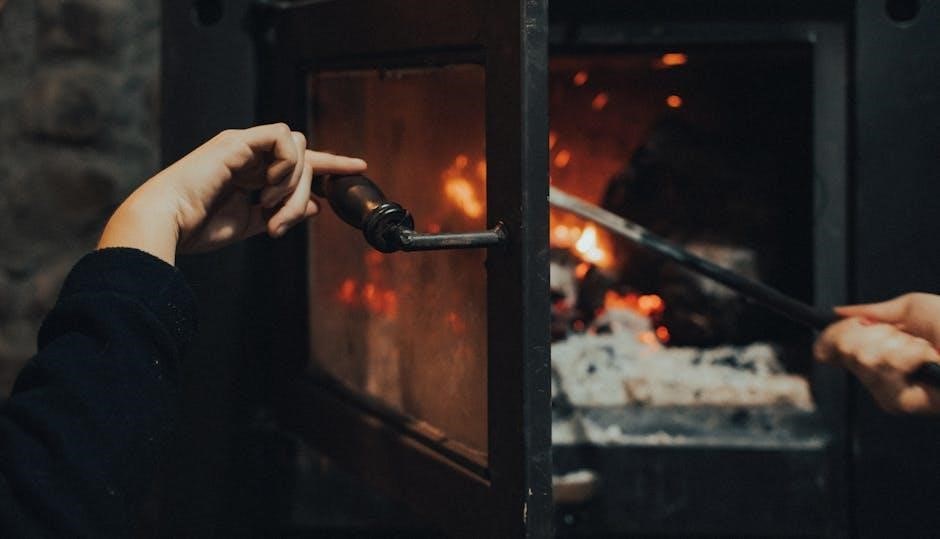
Adjust the thermostat setting as needed to fine-tune the room temperature to your comfort level.
Weekly Programming Mode
Weekly Programming Mode offers customized heating schedules for each day of the week. Access this feature through the stove’s control panel, allowing you to set different temperatures for various times throughout the day. For example, you can program lower temperatures during sleeping hours or when the house is unoccupied.
This mode maximizes energy savings and comfort by tailoring the heat output to your specific needs. Carefully plan your weekly schedule, considering your daily routines and preferences. The stove will automatically adjust based on your programmed settings, providing consistent and efficient heating.

Maintenance and Troubleshooting
Regular cleaning, igniter and blower replacements, and addressing common issues are crucial for maintaining peak performance and ensuring the longevity of your Castle stove.
Regular Cleaning Procedures
Maintaining a clean Castle pellet stove is paramount for safe and efficient operation. Daily, remove ash from the firebox, ensuring it’s completely cool before disposal in a metal container with a lid. Weekly, inspect and clean the heat exchanger; a vacuum with a brush attachment works best.
Pay close attention to the venting system, checking for obstructions and creosote buildup monthly during heating season. Thoroughly clean the exhaust blower and venting annually, or more frequently with heavy use. Remember to disconnect power before any cleaning procedure. A clean stove ensures optimal heat output and minimizes potential hazards.
Replacing the Igniter
A faulty igniter prevents proper pellet combustion. Before replacement, always disconnect power to the stove. Locate the igniter – typically near the firebox – and carefully remove the retaining clips or screws. Gently disconnect the igniter’s wiring harness, noting its orientation for correct re-installation.
Install the new igniter, ensuring secure connections of both the wiring harness and retaining hardware. Double-check all connections before restoring power. If the stove fails to ignite after replacement, consult a qualified technician. Proper igniter function is crucial for safe and reliable stove operation.
Replacing the Exhaust Blower
A failing exhaust blower compromises venting and stove performance. Disconnect power before beginning. Access the blower – usually at the rear or top of the stove – and detach the exhaust pipe connection. Carefully disconnect the blower’s wiring harness, remembering wire positions. Remove mounting screws or brackets securing the blower.
Install the new blower, ensuring proper alignment with the exhaust port and secure mounting. Reconnect the wiring harness and exhaust pipe, verifying airtight seals. Restore power and observe for correct operation. If issues persist, seek professional assistance. A functioning exhaust blower is vital for safe operation.
Troubleshooting Common Issues
Many issues have simple solutions. If the stove won’t ignite, check pellet levels and power supply. A weak flame may indicate insufficient airflow – clean the burn pot and heat exchanger. Excessive smoke suggests a blocked exhaust vent; inspect and clear obstructions. Unusual noises could signal a failing blower or auger motor;
Error codes displayed on the control panel provide specific diagnostic information; consult the manual for interpretations. If problems persist, do not attempt complex repairs. Contact qualified service personnel for assistance. Regular maintenance minimizes issues and extends stove lifespan.

Parts and Service
Locate replacement parts easily through catalogs and online resources. Customer support is available for assistance with parts identification and service inquiries.
Locating Replacement Parts
Ensuring the longevity of your Castle Pellet Stove relies on readily available replacement parts. Accessing these components is streamlined through several avenues. Firstly, consult the comprehensive parts catalog specific to your stove model – often available for download online or through customer support. These catalogs detail exploded views and part numbers for easy identification.
Secondly, numerous online retailers specialize in pellet stove parts, offering a wide selection of Castle-compatible components. Always verify the part number against your stove’s model to guarantee compatibility. Finally, authorized Castle Pellet Stove dealers can directly assist with locating and ordering parts, providing expert advice and ensuring genuine components are used. Maintaining a list of frequently replaced parts, like igniters or exhaust blowers, can expedite future repairs.
Understanding the Parts Catalog
The Castle Pellet Stove parts catalog is a vital resource for owners and technicians alike. It’s organized by model number, ensuring you locate components specific to your stove. Each catalog features detailed exploded diagrams, visually representing how parts assemble. Part numbers are clearly labeled, crucial for accurate ordering.
Beyond part numbers, catalogs often include descriptions and quantities per assembly. Understanding these diagrams allows for efficient troubleshooting and repair. Pay attention to revision dates, as catalogs are updated with new parts or design changes. Online versions often offer search functionality, streamlining the process of finding specific components. Utilizing the catalog correctly minimizes errors and ensures proper stove maintenance.
Contacting Customer Support
Castle Pellet Stoves provides dedicated customer support to assist owners with any questions or concerns. For immediate assistance, consult the official Castle Warmth website; it often features a comprehensive FAQ section addressing common issues. You can typically find contact information, including phone numbers and email addresses, within your stove’s owner’s manual or on their website.
When contacting support, have your stove’s model number and serial number readily available. This allows representatives to quickly access relevant information. Be prepared to describe the issue in detail, including any error codes displayed; Prompt and accurate information expedites the resolution process, ensuring a swift return to comfortable heating.

Advanced Features
Explore customizable settings, including date/time adjustments, blower and exhaust voltage control, and specific considerations for safe and efficient mobile home installations.
Setting Date, Time, and Temperature Units
Your Castle pellet stove offers personalized settings for convenience and accurate operation. Access the settings menu through the control panel to adjust the current date and time, ensuring proper scheduling for weekly programming and accurate operation of thermostat modes.
Furthermore, you can select your preferred temperature unit – Fahrenheit (°F) or Celsius (°C) – to display temperatures according to your preference. This customization enhances usability and allows for a comfortable heating experience. Refer to the detailed instructions within the owner’s manual for a step-by-step guide on navigating the settings menu and making these adjustments. Accurate date and time settings are crucial for utilizing the stove’s advanced scheduling features effectively.
Adjusting Blower and Exhaust Voltages
Fine-tuning blower and exhaust voltages optimizes combustion and heat distribution within your Castle pellet stove. Access these advanced settings through the control panel, typically found within the service or advanced options menu. Adjusting the blower voltage controls the speed of the air circulation fan, impacting heat output and flame appearance;
Similarly, modifying the exhaust voltage influences the draft, affecting combustion efficiency and minimizing smoke. Caution: Altering these settings requires a thorough understanding of your stove’s operation. Incorrect adjustments can lead to inefficient burning or safety hazards. Consult the owner’s manual and, if needed, a qualified technician before making any changes.
Mobile Home Installation Considerations
Installing a Castle pellet stove in a mobile home requires strict adherence to safety regulations and specific guidelines. Ensure the stove is approved for mobile home use, as indicated in the owner’s manual and on the appliance’s label. Proper venting is crucial; a listed and approved venting system designed for manufactured homes must be used.
Additionally, adequate combustion air must be supplied to prevent oxygen depletion. Follow local codes regarding clearances to combustible materials and floor protection. Important: Professional installation by a qualified technician is highly recommended to guarantee safety and compliance with all applicable standards.