
subaru manual transmission fluid
Subaru Manual Transmission Fluid: A Comprehensive Guide (Updated May 5, 2026)
Maintaining optimal gear changes relies on proper lubrication; transmission fluid cleans, cools, and protects your Subaru’s intricate manual transmission system.
Subaru is renowned for its symmetrical all-wheel-drive system, and a crucial component working in harmony with this is the manual transmission. These transmissions deliver a direct and engaging driving experience, favored by enthusiasts for their control and responsiveness. Unlike automatic transmissions, manual systems require the driver to actively select gears, relying heavily on the quality of the transmission fluid for smooth operation.
The manual transmissions found in Subarus, spanning various models and years, are designed for durability and performance. However, they are susceptible to wear and tear, particularly if the transmission fluid isn’t maintained correctly. Understanding the intricacies of these systems and the vital role fluid plays is key to preserving their longevity and ensuring optimal performance on and off the road.
Why Manual Transmission Fluid Matters
Manual transmission fluid isn’t merely a lubricant; it’s the lifeblood of your Subaru’s gearbox. It performs several critical functions, including reducing friction between moving parts, preventing wear, and dissipating heat generated during operation. Clean fluid also suspends and carries away metallic particles created by normal gear wear, preventing abrasive damage.
Over time, transmission fluid degrades, losing its lubricating properties and becoming contaminated. This leads to increased friction, difficulty shifting, and potentially serious internal damage. Neglecting fluid changes can result in costly repairs or even transmission failure, highlighting the importance of regular maintenance and using the correct fluid type for your specific Subaru model.
Types of Subaru Manual Transmission Fluid
Subaru utilizes specific fluids, including genuine options and compatible aftermarket choices like GL-5 and MTF-III, differing in viscosity and composition.
Genuine Subaru Transmission Fluid
Using genuine Subaru manual transmission fluid is often the most recommended approach for maintaining optimal performance and longevity of your Subaru’s gearbox. Subaru engineers specifically formulate this fluid to meet the precise requirements of their transmissions, ensuring proper lubrication, material compatibility, and synchronization with other components.
While potentially more expensive than aftermarket alternatives, genuine fluid minimizes the risk of compatibility issues or damage caused by incorrect specifications. Subaru frequently updates its fluid formulations to improve performance and address evolving transmission designs. Checking your owner’s manual for the correct fluid type is crucial, as different Subaru models and years may require different specifications. Prioritizing genuine fluid demonstrates a commitment to preserving your Subaru’s engineering integrity.
Aftermarket Fluid Options (GL-5, MTF-III, etc.)
Several aftermarket manual transmission fluids can be suitable alternatives to genuine Subaru fluid, offering varying price points and performance characteristics. Common options include GL-5 gear oil, and fluids specifically marketed as MTF-III replacements. However, careful research is paramount before choosing an aftermarket product.
GL-5 fluids, while widely available, may contain additives incompatible with Subaru’s synchronizers, potentially leading to shifting issues. MTF-III replacements aim to mimic the properties of Subaru’s older fluid, but quality varies significantly between brands. Always verify the fluid’s compatibility with your specific Subaru model and year, and prioritize fluids meeting or exceeding Subaru’s specifications. Thoroughly investigate user reviews and expert opinions before making a decision.
Synthetic vs. Conventional Transmission Fluid
The debate between synthetic and conventional manual transmission fluid centers around performance, longevity, and cost. Synthetic fluids generally offer superior thermal stability, resisting breakdown at higher temperatures, and providing better lubrication in extreme conditions. This translates to smoother shifting and potentially extended transmission life.
Conventional fluids are typically more affordable upfront, but may require more frequent changes due to their lower resistance to heat and shear. For Subaru manual transmissions, especially those subjected to spirited driving or towing, a high-quality synthetic fluid is often recommended. However, switching from conventional to synthetic requires careful consideration; ensure compatibility and potentially flush the system to avoid mixing issues.

Identifying Your Subaru’s Transmission Fluid Needs
Accurate fluid specification is crucial; consult your owner’s manual and determine your Subaru’s transmission type for optimal performance and longevity.
Checking Your Owner’s Manual
Your Subaru’s owner’s manual is the primary source for identifying the correct manual transmission fluid specification. It details the exact fluid type recommended by Subaru for your specific model year and transmission configuration. Don’t rely on general recommendations; variations exist even within the same model line.
Locate the section dedicated to maintenance schedules and fluid capacities. This section will explicitly state whether your vehicle requires a specific Subaru fluid or if compatible aftermarket fluids are permitted. Pay close attention to any listed fluid standards, such as GL-5 or MTF-III. The manual will also outline the recommended fluid change intervals, helping you maintain optimal transmission health. Ignoring the manufacturer’s recommendations can lead to premature wear and potential transmission failure.
Determining Transmission Type (5-Speed, 6-Speed)
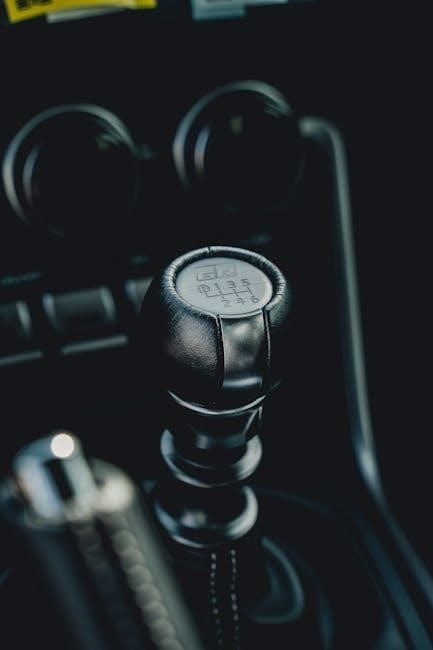
Identifying whether your Subaru has a 5-speed or 6-speed manual transmission is crucial for selecting the correct fluid. The fluid requirements differ significantly between these types. A simple visual inspection often reveals the answer; 6-speed transmissions typically have a slightly different shift linkage and gear knob feel.
Alternatively, check your vehicle’s VIN (Vehicle Identification Number). Online VIN decoders can provide detailed specifications, including transmission type. Referencing service manuals specific to your Subaru model and year will also confirm the transmission configuration. Using the wrong fluid – for example, using fluid intended for a 5-speed in a 6-speed – can cause severe damage and compromise shifting performance.
Fluid Specifications by Subaru Model & Year
Subaru’s transmission fluid requirements vary considerably depending on the model and year. Older models, like many pre-2008 Imprezas and Foresters, often specify GL-5 gear oil, while newer generations increasingly demand Subaru’s dedicated Manual Transmission Fluid (MTF). Specifically, many 2008-2018 models utilize MTF-III.
Post-2019 models, including some Ascents and Outbacks, may require updated fluid formulations. Always consult your owner’s manual or a Subaru dealership’s service department for the precise specification. Incorrect fluid can lead to premature wear, noisy operation, and ultimately, transmission failure. A detailed chart correlating model year with fluid type is essential for accurate maintenance.

Subaru Manual Transmission Fluid Change Procedure
Regular fluid changes are crucial for longevity. This process involves safely draining the old fluid and refilling with the correct specification, ensuring smooth operation.

Tools and Materials Required
Successfully completing a Subaru manual transmission fluid change demands specific tools and materials. You’ll need a wrench or socket set to remove the drain and fill plugs – sizes vary by model, so consult your owner’s manual. A fluid pump is essential for efficiently filling the transmission, as access can be limited.
Furthermore, a drain pan is vital for containing the old fluid, preventing a mess. Gloves and safety glasses are crucial for personal protection. Of course, the correct quantity and type of Subaru manual transmission fluid are paramount – refer to the fluid specifications section.
Finally, a torque wrench ensures proper tightening of the plugs, preventing leaks or damage. Rags or paper towels are needed for cleanup, and a funnel can aid in the filling process. Consider a new crush washer for the drain plug to maintain a secure seal.
Step-by-Step Fluid Drain and Fill Process

Begin by safely lifting your Subaru and securing it with jack stands. Locate the drain and fill plugs on the transmission. Place the drain pan beneath the drain plug, then carefully remove the plug, allowing the old fluid to drain completely.
Once drained, reinstall the drain plug with a new crush washer, tightening to the specified torque. Next, locate the fill plug and remove it. Using a fluid pump, slowly fill the transmission with the correct fluid until it reaches the fill plug opening.
Finally, reinstall the fill plug, again tightening to the specified torque. Lower the vehicle and check for leaks around both plugs. Start the engine and let it idle briefly, then recheck the fluid level.
Torque Specifications for Drain and Fill Plugs
Proper torque is crucial to prevent leaks and damage. For most Subaru models with a 5-speed manual transmission, the drain plug typically requires tightening to 38.7 ft-lbs (52.5 Nm). The fill plug generally needs 27.8 ft-lbs (37.8 Nm).
However, 6-speed transmissions often have different specifications. Consult your owner’s manual or a reliable service database for the exact torque values for your specific Subaru model and year.
Using a torque wrench is highly recommended. Over-tightening can strip the threads, while under-tightening risks leaks. Always use new crush washers with each fluid change to ensure a proper seal and prevent future issues.

Common Problems & Symptoms of Low/Old Fluid
Degraded fluid causes shifting difficulties, noticeable grinding, and potential transmission slippage, impacting performance and potentially leading to costly repairs if ignored.
Difficulty Shifting Gears
Experiencing resistance or struggling to select the correct gear is a primary indicator of transmission fluid issues. Low or degraded fluid diminishes the hydraulic pressure needed for smooth clutch engagement and disengagement. This manifests as notching, hesitation, or a general stiffness when moving the shift lever. You might find certain gears harder to reach than others, or experience a complete inability to shift into specific gears, especially when the transmission is cold. Ignoring this symptom can lead to increased wear on synchronizers and other internal components, ultimately resulting in more extensive and expensive repairs. Regular fluid checks can prevent this frustrating and potentially damaging situation.
Grinding Noises During Shifting
A distinct grinding sound while attempting to change gears is a serious warning sign, often linked to insufficient lubrication within the transmission. This noise indicates that the synchronizers – responsible for matching the speeds of the gears before engagement – aren’t functioning correctly. Worn or low fluid prevents proper synchronization, causing the gears to clash. The grinding is particularly noticeable during quick shifts or when downshifting. Prolonged grinding accelerates wear on the gears themselves, potentially leading to chipped teeth and eventual transmission failure. Addressing this issue promptly by checking and replacing the fluid is crucial to avoid costly repairs.
Transmission Slippage
Transmission slippage manifests as a delay or inability to engage a gear, or the engine revving without a corresponding increase in vehicle speed. This occurs when the transmission fluid lacks the necessary viscosity or volume to effectively transfer power from the engine to the wheels. Worn fluid loses its lubricating properties, reducing friction and causing the clutch plates to slip instead of firmly engaging. Slippage can range from intermittent occurrences to a complete loss of drive in certain gears. Ignoring this symptom can lead to severe internal damage, including burnt clutch packs and ultimately, transmission failure. Regular fluid checks and timely replacements are vital.
Preventative Maintenance & Fluid Change Intervals
Proactive fluid changes, adhering to Subaru’s recommendations, safeguard your manual transmission, ensuring smooth operation and preventing costly repairs down the road.
Recommended Service Intervals
Subaru generally recommends inspecting your manual transmission fluid every 30,000 miles or 36 months, whichever comes first. However, a complete fluid change is typically advised around the 60,000-mile mark, or every 5 years, for standard driving conditions.
For those engaging in more strenuous activities – frequent towing, off-roading, or aggressive driving – shortening these intervals is crucial. Consider a fluid change every 30,000 miles or 2.5 years. Always consult your owner’s manual for the precise recommendations specific to your Subaru model and year. Ignoring these intervals can lead to premature wear and potential transmission failure, resulting in significant repair costs.
Extending Fluid Life (Driving Habits)
Gentle driving habits significantly contribute to extending the life of your Subaru’s manual transmission fluid. Avoiding harsh acceleration, aggressive shifting, and “riding the clutch” minimizes heat generation and internal wear. Smooth, deliberate gear changes reduce stress on the fluid and transmission components.
Regular highway driving, where the transmission operates at consistent temperatures, is generally easier on the fluid than frequent stop-and-go city traffic. Allowing the transmission to warm up fully before demanding performance also helps. Prioritizing these driving techniques can postpone fluid changes and maintain optimal transmission health for longer periods, saving you money and downtime.
Signs You Need a Fluid Change Sooner
Despite recommended intervals, certain conditions necessitate earlier manual transmission fluid changes. Noticeable difficulty shifting, especially into specific gears, is a key indicator. Increased whining or grinding noises during gear engagement suggest fluid degradation and potential internal damage.
Also, a metallic smell emanating from the transmission, or visible metal flakes in the drained fluid, signals severe wear. Frequent clutch slippage, even with a properly adjusted clutch, can also point to fluid issues. If you regularly tow heavy loads, engage in spirited driving, or operate in extreme temperatures, shorten your fluid change intervals to prevent premature transmission failure.

Potential Issues & Troubleshooting
Addressing leaks, contamination, or incompatibility with aftermarket fluids requires careful diagnosis and appropriate solutions to maintain transmission health and performance.
Fluid Leaks: Causes and Solutions
Transmission fluid leaks are a common concern in Subaru manual transmissions, often stemming from worn seals or gaskets. These components degrade over time due to heat and pressure cycles, leading to drips around the transmission housing, axles, or even the shift linkage. Damaged seals around the driveshaft or differential can also contribute.
Identifying the source is crucial; a thorough inspection with a flashlight is recommended. Minor leaks might initially require tightening fill or drain plugs. However, significant leaks usually necessitate replacing the affected seals or gaskets. Ignoring leaks can lead to low fluid levels, causing shifting problems and potential transmission damage. Professional repair is often advised for complex seal replacements, ensuring proper installation and preventing future issues.
Contamination of Fluid
Maintaining the purity of your Subaru’s manual transmission fluid is vital for longevity. Contamination can occur through several avenues, including metal shavings from gear wear, clutch material debris, and external pollutants entering during fluid changes or through damaged seals. Water ingress, often from condensation or improper sealing, is also a significant concern, leading to corrosion and reduced lubrication.
Dirty fluid loses its ability to effectively lubricate and protect transmission components. Regular fluid changes are the primary defense against contamination. Magnetic drain plugs can capture metallic particles, and using a clean funnel during refills prevents external debris from entering. If significant contamination is detected, a complete transmission flush, alongside fluid replacement, might be necessary to restore optimal performance.
Compatibility Issues with Aftermarket Fluids
Selecting an aftermarket manual transmission fluid for your Subaru requires careful consideration. Not all fluids are created equal, and using an incompatible product can lead to serious transmission damage. Subaru transmissions are particularly sensitive, and some GL-5 based gear oils can react negatively with the yellow metals commonly found within them, causing corrosion and premature wear.
Specifically, older Subaru transmissions often require fluids meeting specific Subaru specifications (like MTF-III). While some aftermarket fluids claim compatibility, verifying this with Subaru documentation or a knowledgeable mechanic is crucial. Incorrect viscosity or additive packages can also cause shifting problems or internal component failure. Sticking with fluids explicitly designed for Subaru manual transmissions is generally the safest approach.